What's in the night sky tonight over Madison?
Madison sky tonight: October–December 2026
| Month | Evening planets | Before dawn | Brightest after dark | Fully dark |
|---|---|---|---|---|
| mid-October · 9:00 pm | Saturn (SE) | Mars (rises 12:53 am), Jupiter (rises 1:57 am) | Vega (W), Capella (NE), Saturn (SE, planet) | 7:49 pm |
| mid-November · 9:00 pm | Saturn (S) | Mercury (rises 5:11 am), Venus (rises 4:13 am), Mars (rises 11:11 pm), Jupiter (rises 11:14 pm) | Vega (NW), Capella (NE), Saturn (S, planet) | 6:12 pm |
| mid-December · 9:00 pm | Saturn (SW) | Venus (rises 3:29 am), Mars (rises 10:09 pm), Jupiter (rises 9:22 pm) | Capella (E), Rigel (SE), Procyon (E) | 6:06 pm |
From Madison in mid-October: Saturn is in the southeast at 9:00 pm, 32° up (about 3 fists above the horizon). It sets around 6:09 am. Later, Mars rises around 12:53 am and Jupiter rises around 1:57 am. Venus joins the dawn sky in November. Brightest after dark: Vega, Capella and Saturn. Fully dark from 7:49 pm. Full Moons: October 25, November 24 and December 23.
Full Moon: October 25 (11:12 pm), November 24 (8:54 am), December 23 (7:28 pm). New Moon (darkest skies): October 10, November 9, December 8. For tonight to the minute, use the live chart just below.
- Make tonight's sky a gift. Preview the free star map of a night in Madison
- Or name a star in Pegasus, high over Madison on October evenings: a symbolic dedication with a PDF certificate. Choose a star in Pegasus
Use the free local tool
This page provides a result prefilled with the place and coordinates. The calculations and phone gyroscope work without an order; the HD poster remains optional. See tonight's sky over Madison
The planets, bright stars and dark hours of October–December 2026, plus a live chart for tonight
The season table answers for October–December 2026 in Madison's own clock time; the live chart recomputes tonight's Moon, planets and constellations for the city or for your exact location. Both are free and need no sign-up.
Why choose Starry Memory
- Answer first, computed for the city — The season table is calculated for Madison's own sky and clock, month by month, rather than copied from a national guide.
- Live for tonight — The chart below recomputes the Moon, planets and constellations for tonight and for your exact location if you allow it.
- Planets and bright stars named — Each month lists which planets are up in the evening, which rise before dawn, and the brightest points you are likely to notice.
- Honest limits — Weather, light pollution and a low horizon are stated, not hidden: a planet above the horizon can still be lost behind cloud or buildings.
The sky over Madison changes through the night and through the season. This guide gives the answer for October–December 2026 first; the live chart then shows tonight exactly.
Planets from Madison, month by month
In mid-October: Mars rises around 12:53 am and stands 55° high in the southeast an hour before sunrise; Jupiter rises around 1:57 am and stands 45° high in the southeast an hour before sunrise; Saturn is 32° up in the southeast at 9:00 pm and sets around 6:09 am. Mercury and Venus are not visible. In mid-November: Mercury rises around 5:11 am and stands 6° high in the east an hour before sunrise; Venus rises around 4:13 am and stands 16° high in the southeast an hour before sunrise; Mars rises around 11:11 pm and stands 61° high in the south an hour before sunrise; Jupiter rises around 11:14 pm and stands 60° high in the south an hour before sunrise; Saturn is 48° up in the south at 9:00 pm and sets around 2:57 am. In mid-December: Venus rises around 3:29 am and stands 26° high in the southeast an hour before sunrise; Mars rises around 10:09 pm and stands 53° high in the southwest an hour before sunrise; Jupiter rises around 9:22 pm and stands 49° high in the southwest an hour before sunrise; Saturn is 39° up in the southwest at 9:00 pm and sets around 12:57 am. Mercury is not visible.
The brightest lights after dark
The brightest points above Madison on evenings of the season, with their height above the horizon: mid-October at 9:00 pm: Vega, 56° in the west; Capella, 16° in the northeast; Saturn (planet), 32° in the southeast; Altair, 48° in the southwest. mid-November at 9:00 pm: Vega, 25° in the northwest; Capella, 42° in the northeast; Saturn (planet), 48° in the south; Altair, 19° in the west. mid-December at 9:00 pm: Capella, 62° in the east; Rigel, 28° in the southeast; Procyon, 15° in the east; Betelgeuse, 34° in the southeast. Stars twinkle more than planets, especially near the horizon.
Moon phases in Madison time
Full Moon: October 25 (11:12 pm), November 24 (8:54 am), December 23 (7:28 pm). New Moon: October 10 (10:50 am), November 9 (1:02 am), December 8 (6:52 pm). Around full Moon the sky is bright and only planets and the brightest stars stand out; around new Moon, faint stars and the Milky Way reappear away from city lights.
When is it dark in Madison?
On the 15th of each month, full darkness starts at 7:49 pm in mid-October, 6:12 pm in mid-November, 6:06 pm in mid-December. Sunrise comes at 7:12 am in mid-October, 6:51 am in mid-November, 7:23 am in mid-December. From Madison's northern-hemisphere latitude (43.1°), the nights lengthen towards the December solstice.
Constellations to look for this season
High overhead in mid-October: Cygnus, Pegasus, Cepheus, Cassiopeia, Lyra and Andromeda. Rising in the east: Perseus, Aries, Cetus and Auriga. By mid-December: Perseus, Andromeda, Aries, Cassiopeia, Auriga and Taurus overhead, with Gemini, Orion, Canis Minor and Ursa Major rising. Never setting from Madison: Ursa Minor, Cassiopeia, Cepheus and Draco.
Near Madison
From Milwaukee, 122 km away, full darkness in mid-October begins 6 minutes earlier; the same planets and constellations apply, so this guide also works there. Other nearby guides: Chicago (198 km), Saint Paul (361 km).
Eclipses in the region
Eclipses listed for the wider region: 20 February 2027: Penumbral lunar eclipse, 23:14 UTC; 17 August 2027: Penumbral lunar eclipse, 07:14 UTC; 12 January 2028: Partial lunar eclipse, 04:14 UTC; 26 January 2028: Annular solar eclipse, 15:08 UTC; 14 January 2029: Partial solar eclipse, 17:13 UTC; 12 June 2029: Partial solar eclipse, 04:06 UTC. A regional match is not a guarantee: solar-eclipse paths are narrow and a lunar eclipse needs the Moon above your horizon. Check the NASA map for each event and never look at the Sun without certified eclipse glasses.
How the times are calculated
Times are local clock times (daylight saving included) for the centre of Madison, computed on September 26, 2026 with Astronomy Engine for the 15th of each month. “Evening” means 9 pm, or the end of nautical twilight when it is later; “before dawn” means one hour before sunrise; “full darkness” is the end of astronomical twilight. A flat horizon is assumed: hills, buildings, cloud and light pollution can hide low objects. The live chart at the top of the page recomputes tonight for your exact location.
Make tonight's sky over Madison a gift
A night under the Madison sky can become a present. The free star map draws the sky of any date and place at 10 pm (the time is set in the poster creator): check the preview before choosing the HD file or a print. To give a star instead, the certificate is a symbolic dedication in a private registry, with a two-page PDF; you can pick one in Pegasus, high over Madison in mid-October. Whether a star shows to the naked eye depends on its brightness, the hour and your sky.
Frequently asked questions
What is the bright star in the sky tonight in Madison?
In mid-October at 9:00 pm, the brightest points above Madison are Vega (west, 56° up), Capella (northeast, 16° up), Saturn (southeast, 32° up, a planet), Altair (southwest, 48° up). A bright point that barely twinkles is usually a planet: Saturn is the likeliest bright "star" of the evening. For tonight's exact positions, use the live chart on this page.
Which planets can I see tonight from Madison?
In mid-October: Mars rises around 12:53 am and stands 55° high in the southeast an hour before sunrise; Jupiter rises around 1:57 am and stands 45° high in the southeast an hour before sunrise; Saturn is 32° up in the southeast at 9:00 pm and sets around 6:09 am. Mercury and Venus are not visible. In mid-November: Mercury rises around 5:11 am and stands 6° high in the east an hour before sunrise; Venus rises around 4:13 am and stands 16° high in the southeast an hour before sunrise; Mars rises around 11:11 pm and stands 61° high in the south an hour before sunrise; Jupiter rises around 11:14 pm and stands 60° high in the south an hour before sunrise; Saturn is 48° up in the south at 9:00 pm and sets around 2:57 am.
When is it fully dark in Madison tonight?
Full darkness (the end of astronomical twilight) begins around 7:49 pm in mid-October, 6:12 pm in mid-November, 6:06 pm in mid-December. Bright planets and stars appear earlier, about half an hour after sunset.
When is the next full moon in Madison?
In Madison time, the full Moons of the season fall on October 25 (11:12 pm), November 24 (8:54 am), December 23 (7:28 pm). The darkest skies, best for faint stars and the Milky Way, are around the new Moons of October 10, November 9, December 8.
Do I need a telescope?
No. Planets and the brightest stars are easy to see with the naked eye once your eyes adapt for 15 to 20 minutes away from direct lights. Binoculars show Jupiter's moons; a small telescope shows Saturn's rings.
Why does the sky change during the year?
The stars rise about four minutes earlier each night, so the evening sky shifts by about two hours a month as the Earth orbits the Sun. From Madison, Cygnus and Pegasus are overhead in mid-October; by mid-December, Perseus and Aries have taken over and Gemini is rising in the east. The planets also move against the stars from week to week.
See tonight's sky over Madison
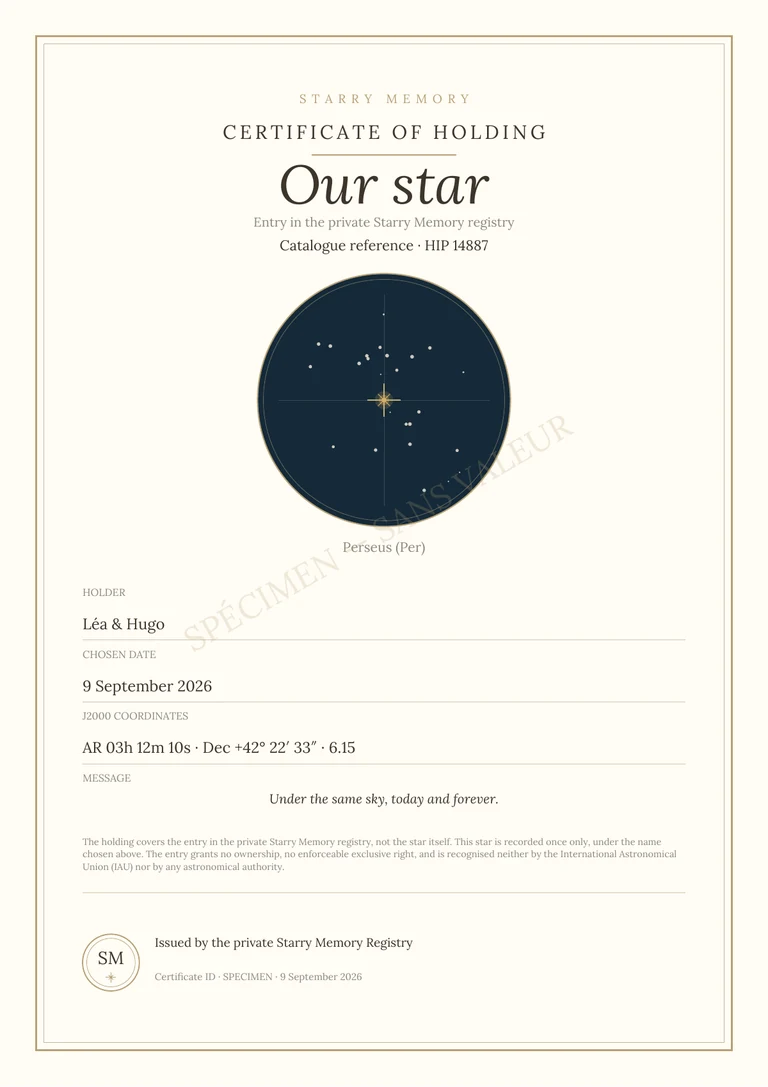
✦ Personalised star certificate
Look up: give a star you can find in the sky
A personalised certificate with a QR code: one smartphone scan shows the star in 3D, then its direction in the real sky.
- Choose a real star and its name
- Scan the certificate’s QR code, no app needed
- Find it in the sky with your smartphone
From €8.91 · PDF to download as soon as you pay
Symbolic dedication in the private Starry Memory registry. Depending on its brightness and the weather, you’ll see it with the naked eye, with binoculars, or find its direction.
Name a star: the certificate in detail
Rather the sky of a date and place? Create a star map · HD file €3.99
See also
- October 2026 planets in Madison
- October 2026 moonless nights in Madison
- A personalised star map gift for Madison
- Night length and darkness calendar for Madison
- Which constellations can you see from Madison tonight?
- Eclipse calendar for Madison
- What's in the night sky tonight over Milwaukee?
- What's in the night sky tonight over Chicago?
- Personalised star map gifts across United States
- The sky tonight, calculated for 374 cities
- What's in the night sky tonight, from where you are?